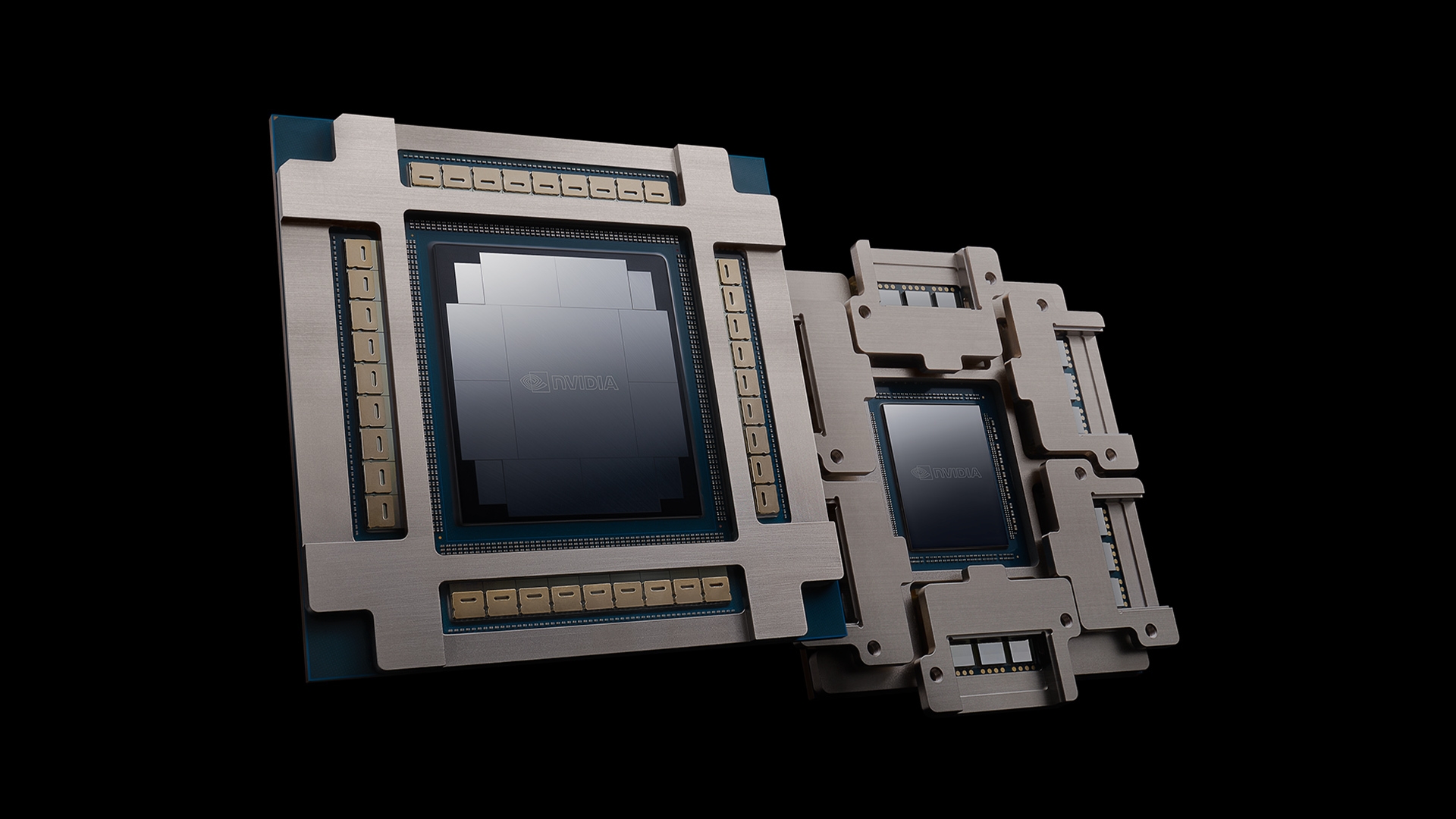
NVIDIA launched Jetson Thor in August 2025 as a robotics computing platform built around Blackwell technology. Its announcement advertised 2,070 FP4 teraflops and substantially more computing capability than Jetson Orin. The launch account described the purpose as bringing richer perception and reasoning onto machines rather than requiring every demanding operation to take a round trip to a remote server.
That is an important direction for autonomy, but the performance figure needs to be kept in its proper role. It describes a computing capability under a particular numerical format. It is not a measure of how safely a robot moves, how often it needs assistance or how long it works on a battery. Those outcomes belong to the complete machine and its operating environment.
Local computation changes the dependency
A robot that can interpret sensor data locally may continue useful work when a network is slow or unavailable. It can also avoid sending every observation to a distant service. The benefit depends on which functions are actually onboard. A machine with local perception may still require remote planning, fleet coordination or authorization for certain actions.
The operator needs that division explained precisely. “Edge AI” can describe several architectures, ranging from a largely self-contained system to one that uses local processing only as a front end. The important question is what the robot can do when its external connections disappear and how it communicates the reduction in capability to the person responsible for it.
The development kit is not the production robot
NVIDIA’s Jetson FAQ distinguishes developer kits from production modules. This is more than a purchasing detail. A kit helps engineers explore software and connect sensors; a deployed robot needs a design validated for its own physical conditions, interfaces and maintenance arrangements. The reference configuration does not automatically establish those properties for every machine built around it.
The distinction also affects expectations about supply and support. A prototype can be rebuilt or attended by its developers. A fleet installed at customer sites requires repeatable replacements and a clear record of what hardware each unit contains. Treating the prototype bill of materials as the final operating design can postpone those decisions until they become expensive to change.
More model capacity is not always the right answer
A larger onboard model may improve a difficult interpretation task while consuming resources needed elsewhere. Mapping, control, logging and communication also need time and memory. The system designer must allocate the computer across those functions, including periods when several events occur together. An impressive model demonstration on an otherwise idle device is only one part of that evaluation.
MLPerf’s edge methodology offers standardized ways to compare defined inference workloads. A robot still needs application-level testing with its actual sensors and control software active. It is possible for a fast inference result to arrive too late because of delay before or after the model. The full observation-to-action path determines whether the result is useful.
Heat and power become behavior
On a mobile machine, computing is paid for in more than currency. It draws from an electrical and thermal budget shared with motors, sensors and other equipment. The relevant design question is not whether the computer can reach a peak rating once, but whether the robot can sustain the intended behavior over a working period.
That creates a reason to separate routine and exceptional work. A smaller, predictable process may handle continuous monitoring, while a more demanding model is invoked for difficult cases. Such an arrangement needs its own validation, particularly around the handoff. It should not be assumed to work simply because both models run successfully when tested alone.
A fleet has a longer life than a launch cycle
NVIDIA’s product lifecycle page publishes availability information for production modules and explains that developer kits are treated differently. For buyers, the wider point is that long-lived equipment requires a plan beyond the current model release. The robot’s service life may include component changes, software updates and revised customer tasks.
The integration should therefore preserve a clear record of model versions, hardware configurations and observed performance. When a replacement part or software change arrives, the operator needs to know which evidence must be repeated. A platform with more computing headroom can make future improvements possible, but headroom is not a substitute for maintaining that record.
The launch materials describe separate developer-kit and production-module offerings, alongside partners building complete systems with different interfaces and form factors. That ecosystem is relevant because the same computing module can be integrated into very different machines. A warehouse robot, fixed inspection station and outdoor platform do not share all their physical requirements. The availability of a module creates an engineering option; the integrator still has to establish how that option behaves in its enclosure, with its sensors and power supply. The performance of the module cannot be transferred unqualified to every finished product that contains it.
Jetson Thor is significant because it gives robotics developers another way to place demanding AI functions inside the machine. The strongest deployments will use that option selectively, with explicit limits and measured outcomes. Useful autonomy is the ability to complete a task under real constraints; the onboard computer is valuable when it makes that ability more dependable, not merely when it makes the specification longer.
Sources & evidence
This archive preserves its original editorial date. Sources describe the events and announcements discussed; they do not establish today’s status.