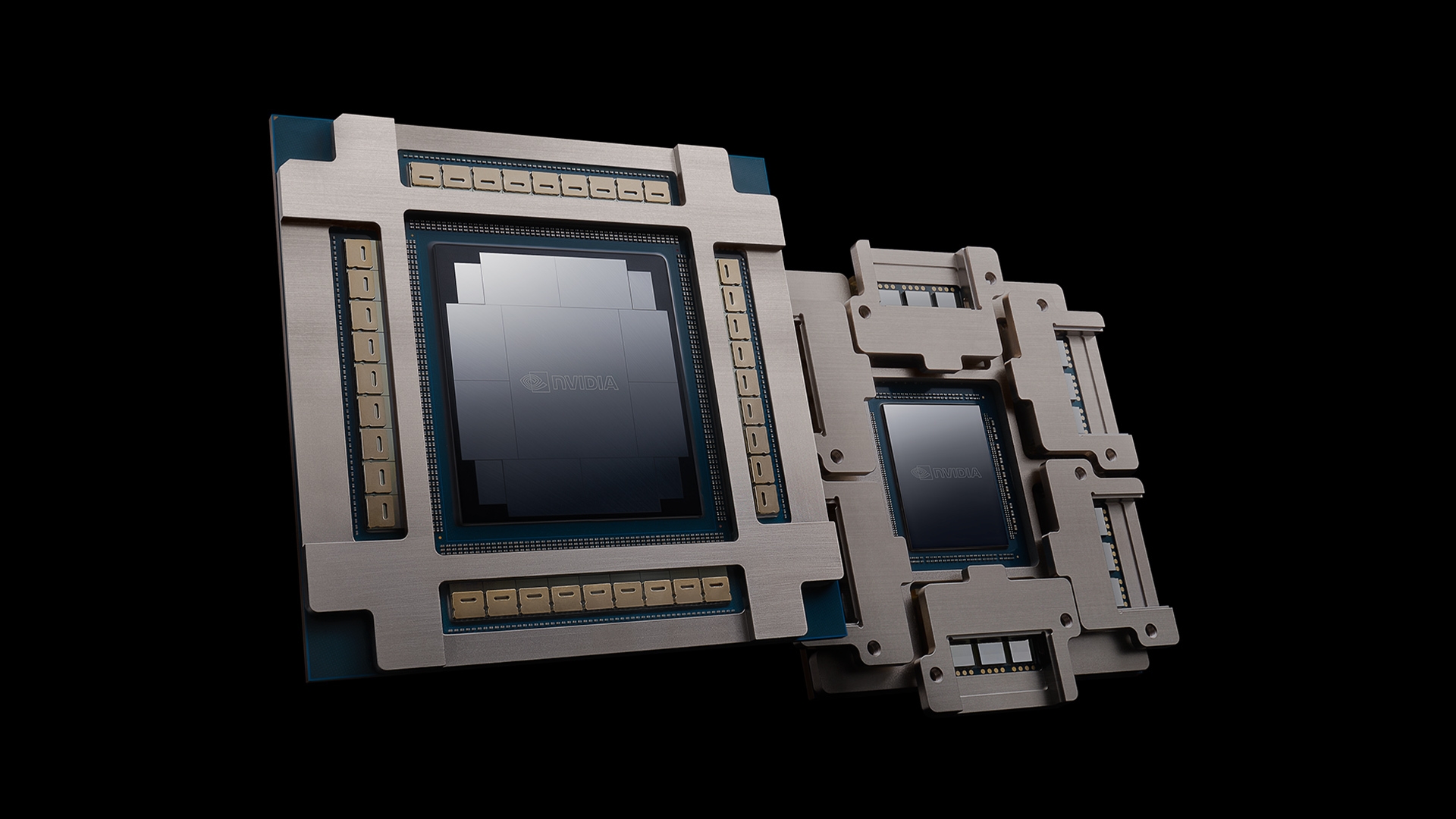
NVIDIA’s March 2025 introduction of Spectrum-X and Quantum-X photonics switches described a way to connect very large AI installations while reducing the burden of moving information between them. The announcement made networking a central part of the AI infrastructure story. As autonomous applications perform longer sequences of model and tool operations, the network increasingly helps determine whether expensive computing equipment is working or waiting.
The story is not that optics abolishes distance or makes every application faster. It is that data movement has become important enough to justify changing the way a switch is built. A customer deciding whether the change is worthwhile needs to understand the traffic its own service creates, not simply the maximum bandwidth available from a port.
The optical component is part of the system
Co-packaged optics moves optical technology closer to the switching electronics. The intended advantage concerns the electrical path that information must traverse before becoming an optical signal. NVIDIA’s announcement framed this as an efficiency and scaling opportunity. It was a statement of product direction and expected benefit, not an independent measurement of every future installation.
Lumentum’s partnership announcement identifies its lasers as part of the ecosystem supporting NVIDIA’s approach. That detail matters commercially. AI infrastructure spending is distributed across specialized suppliers, not captured solely by the company whose name appears on the finished accelerator. The optical supply chain becomes one of the dependencies behind the capacity a cloud operator promises to customers.
An agent creates several kinds of traffic
A model running across multiple devices may require tightly coordinated communication. An agent calling a remote tool creates a different pattern: a request, a wait and a response that may depend on another service. Moving a large dataset into an evaluation job is different again. They all use networks, but they do not benefit from the same improvement in the same way.
That is why network specifications need to be connected to a workload description. A faster internal fabric may be important to a distributed model while doing little for a workflow waiting on an external database. Conversely, unreliable communication between application services can undermine an excellent accelerator cluster. The architecture must follow the task through both parts of the system.
Scale can expose the slowest participant
MLCommons’ September 2026 analysis includes multi-node submissions and systems combining different accelerators. Such results show that the industry is testing configurations larger and more varied than one isolated device. They also make it important to retain the exact system description when comparing performance. A result achieved by many cooperating components cannot be attributed to one component without qualification.
In a coordinated job, an underperforming part of the system can delay useful progress elsewhere. The resulting cost is not just the slow component’s purchase price. It includes the time that other resources remain allocated while waiting. A network upgrade should therefore be evaluated against completed work and the distribution of delays, not only its own utilization counter.
Integration changes maintenance questions
Bringing components closer together can improve an engineering trade-off while changing how failures are handled. Buyers need to understand which parts are replaceable, what diagnostic information is available and how service is restored. These are questions for the proposed product and support arrangement; they should not be answered by assuming that every optical design has the same maintenance characteristics.
The operator also needs a realistic inventory and repair plan. A highly efficient installation that cannot obtain a critical replacement component may deliver less useful work over a year than a less ambitious system with predictable service. Reliability is not the opposite of performance. It is one of the conditions required to receive performance consistently.
The next platform makes the connection explicit
NVIDIA’s Vera Rubin platform announcement includes networking and storage alongside computing. That packaging reflects an increasingly system-level sales proposition. For buyers, it can simplify responsibility when a supplier stands behind the complete configuration. It can also make it harder to determine which part of an upgrade produces the benefit and which creates additional dependence.
A useful commercial comparison asks for the same application, quality target and response-time requirement on each proposed system. It should include network power, supporting equipment, software integration and the effect of interruptions. The cheapest port or highest advertised bandwidth is not necessarily the lowest-cost route to an acceptable result.
The supplier relationship is particularly revealing because lasers are not interchangeable with the whole network. Lumentum’s release identifies a contribution to the optical system; it does not claim to provide the entire AI fabric. The same care should be used when following investments in the sector. Revenue opportunities for optical components, switches, system integration and cloud service can arise from the same deployment while remaining different businesses. A company’s participation in an ecosystem is evidence of a role, not proof that it captures the full value of every system subsequently announced by the platform vendor.
Photonics deserves attention because it addresses a real limit in scaling AI infrastructure: information has to move through physical systems. Its importance to autonomy will be established by whether that movement becomes efficient and dependable enough to support more useful work. The investment story reaches beyond chips, but the standard for judging it remains concrete: a service that completes its tasks at a cost the customer can sustain.
Sources & evidence
This archive preserves its original editorial date. Sources describe the events and announcements discussed; they do not establish today’s status.