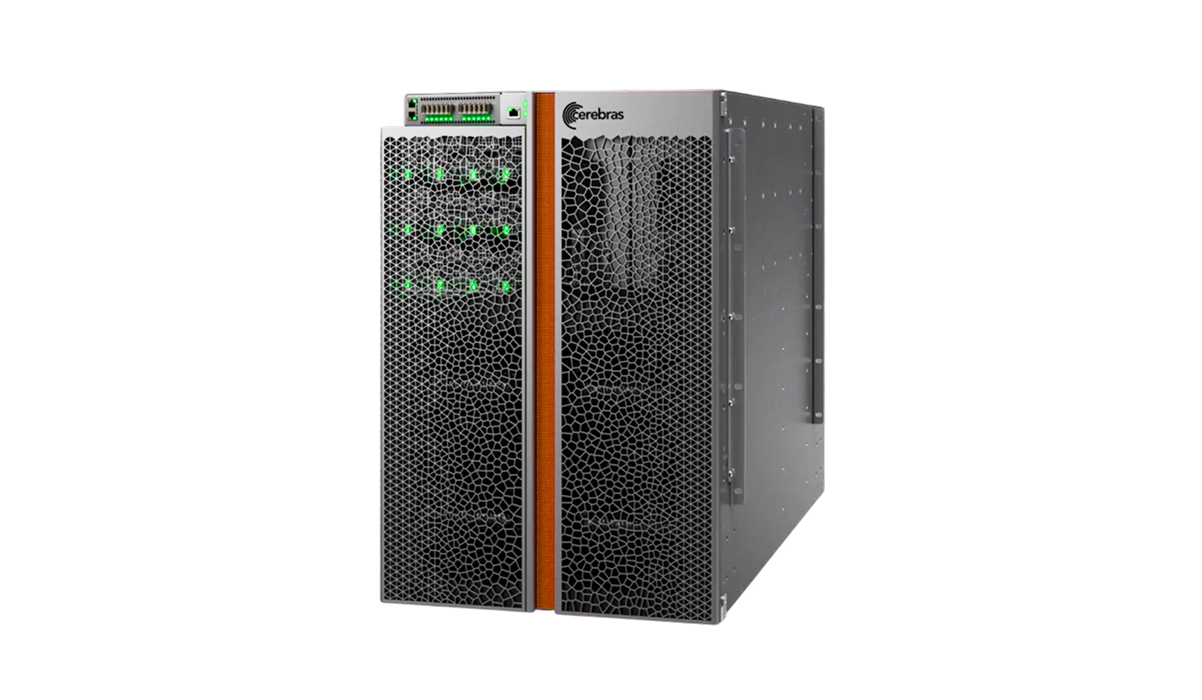
Cerebras’ January 2026 OpenAI partnership announcement put low-latency inference at the center of its commercial argument. The company described a dedicated role for fast responses in interactive AI and coding. That is a plausible source of value for autonomous software: an agent that waits less between useful steps can finish sooner. But the economic question is wider than how many tokens a processor can produce in a second.
A customer pays for an outcome. The outcome may be a repaired program, a checked document or a resolved support request. Producing text is one part of that work. The cost also includes retrieving information, running tools, recovering from failures and obtaining whatever human review the task requires. Faster inference is valuable when it improves that complete process.
Tokens are an input to the job
A short response can trigger an expensive action, while a long response may complete a simple task without further work. Token counts therefore need to be interpreted alongside what the system is doing. An agent that repeats an unsuccessful tool call can consume more resources even if each individual model invocation is inexpensive.
The useful comparison holds the quality threshold constant. Two systems should be asked to complete equivalent work, and a result should count only if it meets the same acceptance conditions. Otherwise a system that stops early with an incomplete answer can appear more efficient than one that actually finishes. The accounting boundary has to match the customer’s definition of success.
The operating scenario changes the result
MLPerf’s datacenter framework distinguishes scenarios because performance depends on how work arrives and is served. A provider maximizing batch throughput faces a different problem from one maintaining responsive interactive sessions. The same hardware can look attractive or disappointing depending on which demand pattern is used to evaluate it.
For an agentic product, waiting time can accumulate across many sequential steps. A modest improvement repeated throughout a workflow may matter more than a spectacular improvement in a stage that runs only once. Conversely, accelerating inference will have limited effect if the task spends most of its time waiting for a slow external service. The workflow trace reveals which case applies.
Cheap capacity can create expensive interruptions
AWS’s Spot documentation describes interruption notices for reclaimable computing capacity. Such capacity can be useful for work designed to resume or restart. It is a less straightforward choice for a tightly coordinated job that loses substantial progress when one component disappears. The advertised computing rate does not include the cost of that lost work.
The same principle applies even without a cloud interruption. A model error, unavailable tool or expired permission can force part of an autonomous task to repeat. A sound cost model records successful work, abandoned work and repeated work separately. Combining them into total token usage conceals whether the system is becoming more productive or merely more active.
Purchasing options should follow the workload
AWS’s purchasing decision guide sets out options with different commitments and capacity properties. The lesson for an AI business is not that one option is always best. It is that a stable production service, an experimental evaluation and a scheduled training run may justify different purchases even when they use similar hardware.
A startup can benefit from retaining flexibility while demand is uncertain. A mature service may justify committing a predictable base load while leaving bursts on another arrangement. The correct balance depends on actual usage and the cost of being unable to serve it. A discount on capacity that remains idle is not equivalent to a reduction in the cost of completed customer work.
Review labor belongs in the calculation
Autonomous systems often transfer some work to a reviewer. That work is not free simply because it occurs outside the model API. A system that generates plausible but poorly supported answers may save computing expense while increasing the time needed to check them. A slightly more expensive configuration may be economical if it reduces that burden without lowering quality.
The comparison should therefore include the reviewer’s task: what information is available, how quickly errors can be found and whether the system clearly identifies unfinished work. This is particularly important when a product claims to replace a workflow rather than assist with one step. The wider the claim, the wider the accounting boundary should be.
AWS describes a two-minute interruption notice for many Spot interruptions, with different behavior for hibernation. That is a short operating window for a job that has accumulated substantial intermediate state. The important engineering question is whether the application can preserve useful progress before the instance is reclaimed, not whether a notice exists somewhere in the platform. For an autonomous workflow, state can include completed tool actions that should not be repeated. Restarting computation is not the same as safely replaying external effects. A low-cost capacity choice must therefore be accompanied by a recovery design appropriate to the actual job.
Cerebras’ emphasis on speed points to a real dimension of AI value. The next step is to connect speed with accepted output. A useful cost record would show the complete task, its quality threshold, elapsed time, infrastructure expense, retries and review. That would let customers distinguish an inexpensive response from an inexpensive result—and let infrastructure providers demonstrate the value their systems actually deliver.
Sources & evidence
This archive preserves its original editorial date. Sources describe the events and announcements discussed; they do not establish today’s status.